GCC Spec: What Is Actually Different, and What Is Just Repeated
The spec sheet is the argument everyone makes. The warranty, the registration and the resale are the reasons that actually decide it.
A claim everybody makes and nobody sources
Search this question and you will get twenty articles telling you the same four things: GCC-spec cars have larger radiators, stronger air conditioning, better dust sealing and heat-resistant paint. They are written by dealers, rental companies and warranty brokers, and they cite each other.
Some of it is true. Manufacturers genuinely do build region-specific variants, and a car engineered for a market where 45 °C is a normal afternoon is not identical to one built for Michigan.
But "manufacturers adapt cars for hot markets" is a general statement, and it gets repeated as though it were a specification. What actually differs varies by manufacturer, by model and by model year, and for most cars it is not published anywhere you can check.
So here is the version we would give a friend. First the differences that are documented and decide real money. Then the spec-sheet folklore, honestly labelled.
The difference that costs the most: the warranty
This one is not a matter of engineering opinion. It is contractual, and it is the single biggest financial gap between a GCC car and an import.
A manufacturer warranty in the UAE is provided by the official local distributor, not by the factory in the abstract. The distributor imported the car, is paid to support it, and honours the warranty on that basis.
A car brought in through any other channel was never part of that arrangement. The distributor did not import it, is not being paid to support it, and is generally not obliged to honour a warranty on it — nor, in many cases, to perform recall work or goodwill repairs.
So the practical position on a grey import is: no manufacturer warranty in this country, and a main-dealer network that may be reluctant to take the car at all. A third-party warranty can be bought, and is not the same product.
On a car sold new for AED 250,000, three years of factory cover is not a footnote. It is a substantial part of what the price bought.
The paperwork that decides whether you can register it
The second documented difference is procedural, and it is absolute rather than a matter of degree.
An imported used vehicle needs an ESMA conformity letter — confirmation from the Emirates Authority for Standardisation and Metrology that it meets UAE requirements — before it can be registered here. Without it the car does not go on the road, whatever you paid for it.
A GCC-spec car sold through the official channel arrives with this settled. An import does not, and the cost and difficulty of resolving it varies with what the car is.
This is worth confirming before money moves rather than afterwards, because the failure mode is not an inconvenience. It is a car you own and cannot drive.
The discount that reappears when you sell
The third documented difference is the one people notice last and pay for twice.
UAE listings routinely separate GCC-spec and imported cars, and imports sit lower. That is not sentiment — it reflects the warranty gap, the service-network friction, and the buyer's inability to verify history from another jurisdiction.
Which means the saving you make at purchase is largely borrowed against your own resale. You buy at a discount because the market discounts these cars, and then you sell into the same discount, usually deeper because the car is older and the next buyer is more cautious than you were.
Insurance follows a similar pattern: insurers price imported vehicles differently, and cover can be narrower or harder to place. Worth a phone call before you commit rather than after.
Now the spec sheet, honestly
Here is where we part company with most articles on this subject.
Cooling. The claim is that GCC cars get larger radiators and higher-capacity fans. Region-specific cooling and A/C calibration for hot markets is real and manufacturers do it. Whether it applies to your specific car, and how much, is model-dependent and usually not published. Treat it as likely rather than certain.
Air conditioning. Same status. Hot-market variants commonly get higher-capacity systems or different calibration. Again: likely, model-dependent, rarely documented publicly.
Dust and sand sealing. Plausible, occasionally real, frequently overstated. Every modern car is sealed to a standard; the marginal difference is smaller than the marketing implies.
Paint and corrosion protection. The version usually told — UV-resistant paint for the Gulf sun — is largely folklore. What is genuinely different is the *other* direction: cars for salted northern roads often receive additional underbody corrosion treatment, which in a dry climate is of little consequence.
Fuel. A real one, and checkable. GCC-market cars are set up for locally available octane grades. A high-compression engine tuned for the premium fuel of another market may want Super 98 here, which costs more per litre — a small ongoing cost that nobody quotes you.
Cold-climate equipment. North American cars sometimes carry block heaters and other cold-weather provisions. Useless here, occasionally a source of confusion at inspection.
Source: Manufacturer regional-variant practice; UAE Fuel Price Committee grades
What we actually tell people to check
Strip out the folklore and the decision comes down to four questions, none of which require you to trust anybody.
Ask what the car's market of origin was, in writing. Not "it is GCC" — the VIN and the build record. A dealer can pull the factory build sheet from the VIN in minutes and it costs nothing.
Ask the official distributor whether they will warranty and service it. Directly, by phone, about that VIN. Their answer is the answer, and it is free.
Confirm the ESMA position before you pay, not at registration.
Run the VIN through the checks that match the origin. For an American car, NMVTIS for title brands. For any import, a police check against the INTERPOL stolen-vehicle database — a consumer VIN website does not reach it.
Four questions, an afternoon, no cost. What they will not do is tell you the size of the radiator, and that is fine, because the radiator was never the thing that was going to cost you money.
GCC spec, sourced through the official channel
Every car in the fleet is GCC spec with verifiable history — the boring answer, and the reason the price is what it is. Live prices: the monthly covers the vehicle, with comprehensive insurance, RTA registration and admin in one annual renewal fee.

Chevrolet Traverse 2023
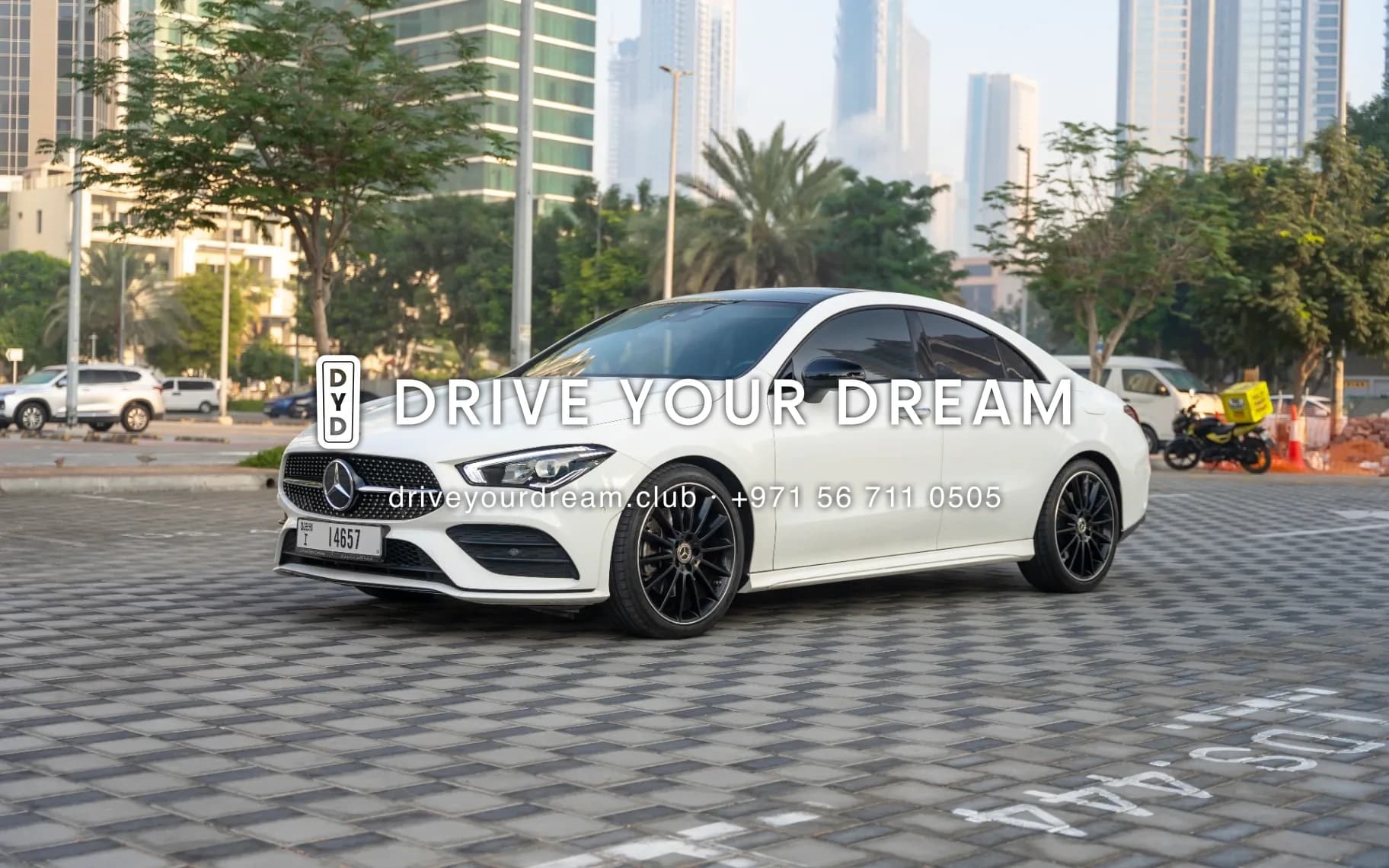
Mercedes-Benz CLA 2023

Mercedes-Benz C-Class 2023
Why we buy GCC spec, plainly
Our fleet is GCC spec, and the reason is not that we believe every claim on the list above.
It is that we lease. The car stays registered to us for the full term, which means the warranty position, the service-network relationship, the registration path and the eventual resale value are all ours to carry. An import shifts every one of those from a known quantity to an unknown one, on an asset we are committed to for three years.
A seller who moves the car on next week has a very different exposure to those four things than we do. That is not a criticism of anyone — it is simply where the risk sits, and it explains our answer better than any spec-sheet argument would.
And if you are buying privately rather than leasing, the offer is the same as always: send us the listing and the VIN, and we will run the checks and tell you what we find. Including when the answer is that the car is fine.
Frequently Asked Questions
What is the real difference between GCC-spec and American-spec cars?
The differences that are documented and cost real money are contractual rather than mechanical: no manufacturer warranty from the UAE distributor on a grey import, an ESMA conformity letter required before registration, a persistent resale discount, and different insurance treatment. Hot-climate spec differences such as cooling and A/C capacity are real in principle but vary by manufacturer and model and are rarely published.
Do GCC-spec cars really have bigger radiators?
Manufacturers genuinely build region-specific variants with cooling and A/C adapted for hot markets, so the claim has substance. But whether it applies to a particular model, and by how much, is usually not published anywhere you can verify. Treat it as likely rather than certain, and do not let it be the reason you choose one car over another when the warranty and resale differences are far larger and fully checkable.
Will a UAE dealer honour the warranty on an imported car?
Generally no. A manufacturer warranty in the UAE is provided by the official local distributor, who imported the car and is paid to support it. A vehicle brought in through another channel was never part of that arrangement, so the distributor is typically not obliged to honour the warranty and may be reluctant to take the car at all. A third-party warranty can be purchased and is a different product.
Can I register an imported used car in the UAE?
Only with an ESMA conformity letter confirming it meets UAE requirements — without it the vehicle cannot be registered regardless of what you paid. Confirm the position before money moves rather than at registration, because the failure mode is owning a car you cannot legally drive.
Do imported cars lose more value in the UAE?
Yes. Listings routinely separate GCC-spec from imported vehicles and imports sit lower, reflecting the warranty gap, service-network friction and unverifiable history. The discount you receive at purchase is largely borrowed against your own resale, and the second discount is usually the deeper one.
Does an imported car need premium fuel in the UAE?
Sometimes. GCC-market cars are set up for locally available octane grades, while a high-compression engine tuned for another market's premium fuel may require Super 98 here, which costs more per litre than Special 95. It is a small ongoing cost that never appears in the purchase comparison.
Run your own number
The calculator shows both lines — the monthly payment for the vehicle and the annual renewal fee covering insurance, registration and admin.
Send us a listing — we check the spec free