You Are Smart Enough Not to Pay Cash for a Car You Drive on Saturdays
The argument for leasing a supercar has nothing to do with affordability. It is about what else the capital could be doing.
This is not an affordability argument
Let us skip the part where an article about expensive cars pretends the reader might not be able to afford one. If you are reading this you probably can, and being told otherwise is tiresome.
The interesting question about a supercar has never been whether the money exists. It is what that specific money is doing while it is parked.
A Lamborghini Urus in our fleet is a AED 785,000 car. On the UAE market an F8 Tributo is comfortably past a million and a 911 Turbo S is not far behind. Those are not transport budgets, they are capital allocations, and the people who own them mostly did not get the money by being careless about capital allocation.
So the honest framing is a portfolio question, not a car question.
Start with the utilisation number
Ask any supercar owner in this city how often they actually drive it, and the answer — once you get past the first answer — is somewhere between two and six times a month.
That is roughly thirty to seventy days a year. On the other 300, it is an asset in a garage.
There is nothing wrong with that. A weekend car is supposed to be a weekend car, and the enjoyment on those thirty days is the entire point. But it does change what kind of purchase it is. You are not buying transport; you are buying access to an experience on specific days, and the sensible way to price anything is by what you get from it rather than what it is worth on paper.
Once you frame it that way, the AED 1,050,000 stops looking like the price of a car and starts looking like the price of a decision about liquidity.
What the cash actually costs you
A million dirhams paid out for a car has three costs, and only one of them appears on the invoice.
The purchase price. Obvious, and the only one people count.
The opportunity cost. That capital is now illiquid and inside a depreciating asset. Whatever return it was generating — in your business, in property, in anything — it is not generating now. For most of our clients this is the largest of the three by a wide margin, because the money was doing something productive before.
The concentration. A single seven-figure position in one physical object, exposed to a used-car market, an insurer's appetite, and the possibility that you simply stop enjoying it in eighteen months.
None of that is an argument against owning a supercar. It is an argument against paying for one in a single lump of cash when you did not have to.
What our structure actually is, precisely
Worth being exact here rather than salesy, because the details are the whole product.
It is lease-to-own, not rental. The vehicle price is spread across the term as fixed monthly payments, and at the end the car transfers to you. No balloon, no residual, no lien. You end up owning it, which matters for a car you might want to keep.
The monthly covers the vehicle. Nothing else is bundled into it.
One annual renewal fee — 5% of vehicle value, minimum AED 8,000 — covers comprehensive insurance, RTA registration and admin. On the Urus that is AED 39,250 a year. That number is large, and it should be: insuring a car at this value in this market is expensive and not always easy to place. You would be paying it either way. The difference is that we source and manage the policy rather than you spending a fortnight on the phone.
No credit check and no bank approval. For an entrepreneur whose money is real but whose UAE credit file is two years old, this is frequently the deciding factor rather than a footnote.
Where the argument genuinely fails
An article that only argues one direction is marketing. So here are the cases where paying cash is the better call, and they are real.
When the car is an appreciating one. Limited-run models, allocation cars, certain manual variants — the market for these does not behave like the market for a used SUV, and if you are buying one as a position rather than as a toy, financing structures matter less than getting the allocation at all.
When you are holding it for a decade. Spread any fixed cost across ten years and it stops being significant. The case for preserving liquidity is strongest over a two-to-four-year horizon.
When the capital genuinely has nowhere better to go. If it is sitting in a current account earning nothing, the opportunity-cost argument above evaporates, and paying cash is simply cleaner.
When you want no counterparty at all. Some people value owning a thing outright with no agreement attached to it, and that is a legitimate preference rather than a mistake.
If none of those describe you, the liquidity argument stands. If one of them does, it does not, and we would rather say so.
What this looks like on real cars
Live prices from the fleet. The monthly is the vehicle spread across the term; comprehensive insurance, RTA registration and admin come as one annual renewal fee of 5% of vehicle value.
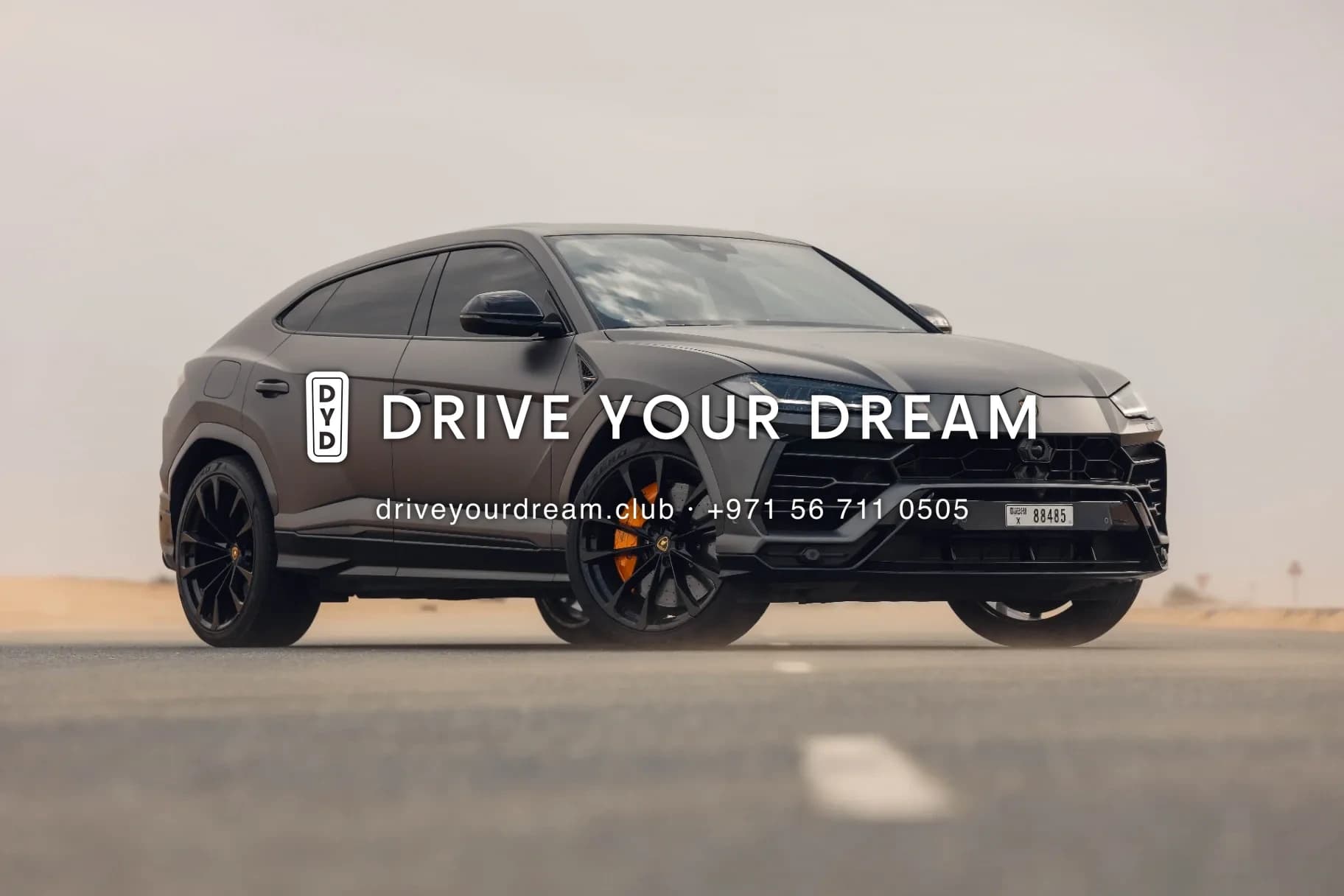
Lamborghini Urus 2021
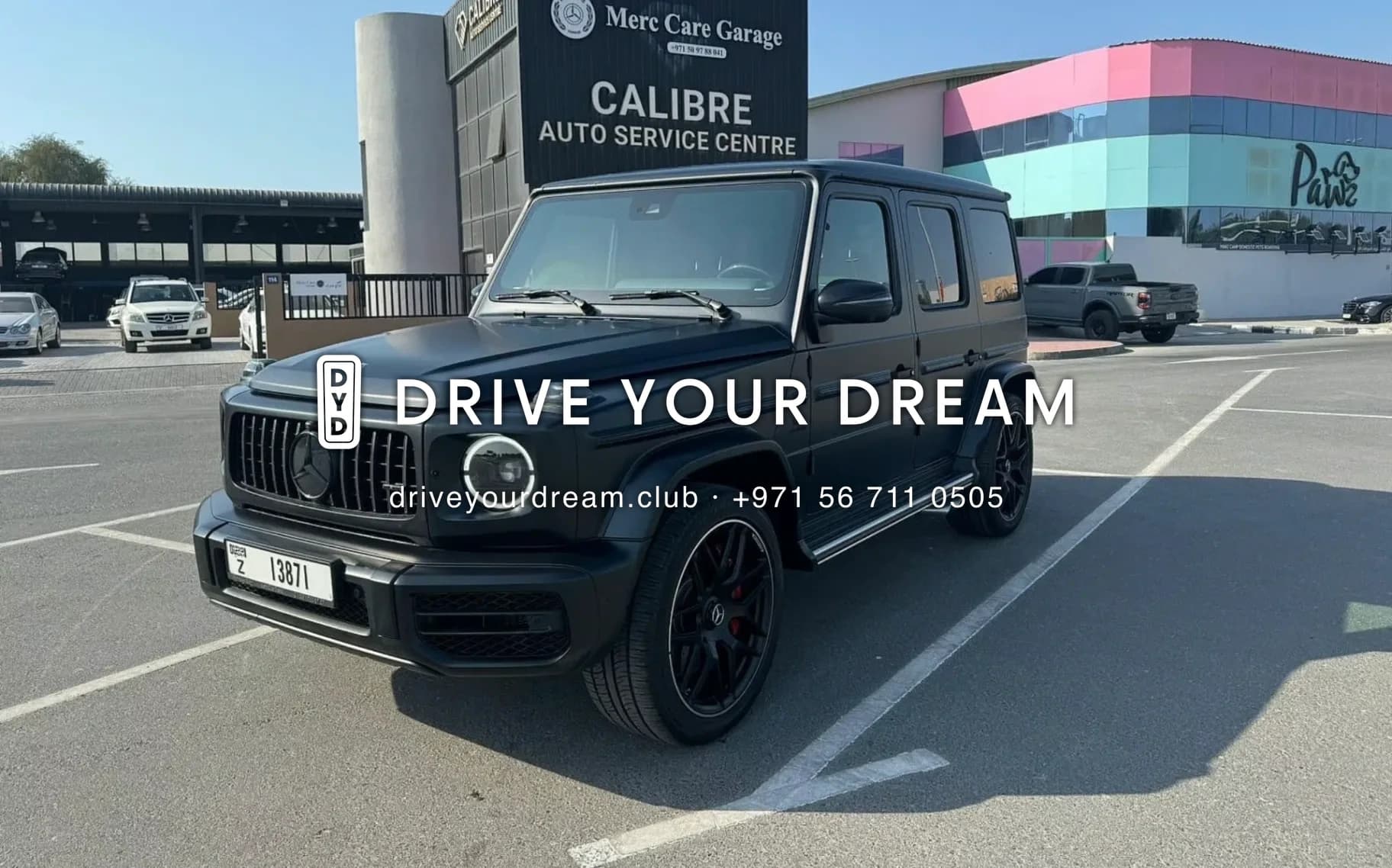
Mercedes-Benz G-Class 2024

Mercedes-Benz G-Class 2022

Mercedes-Benz G-Class 2022
The comparison people actually want
Two ways of getting into the same car — take the Urus in our fleet as the worked example.
Cash. AED 785,000 leaves the account this month. You own the car outright on day one. You then arrange and pay for insurance and registration separately, which on a car like this is a project in itself.
Lease-to-own. AED 22,835 a month with the vehicle transferring to you at the end, plus AED 39,250 a year covering comprehensive insurance, RTA registration and admin — all sourced and managed by us. The capital stays where it was.
The car ends up in your name either way. What differs is when the capital leaves and what it was doing in the meantime, and that is a question only you can price, because only you know what your money earns. The same arithmetic runs on anything in this class — an F8, a 911 Turbo S, a G 63 — only the numbers move.
What we can say is that the people who ask us this question are rarely short of the cash. They are usually people who have thought carefully about where cash should sit, and have decided that a garage is not the place.
Buy the Saturday, not the paperwork
The pleasure of one of these cars is entirely in the driving. None of it is in the ownership structure, the insurance renewal, the registration appointment, or the moment three years later when you try to sell it.
So the reasonable objective is to maximise the first thing and minimise everything else — which means a predictable monthly figure, one annual fee that covers the administrative side, and no seven-figure hole in your liquidity while it happens.
You are, after all, smart enough not to pay full price in cash for a car you drive on Saturdays. That is not a slogan. It is just what the arithmetic says once you count the money that is not on the invoice.
Frequently Asked Questions
Is it cheaper to lease or buy a supercar in Dubai?
On a lease-to-own the vehicle price is spread across the term and the car transfers to you at the end, so you pay for the car either way — the difference is timing, not total. What changes is liquidity: the capital stays available instead of being locked into a depreciating asset you use perhaps thirty to seventy days a year. Whether that is worth it depends entirely on what your capital otherwise earns.
How much does it cost to lease a Ferrari in Dubai?
It depends on the car. In our current fleet a Lamborghini Urus at AED 785,000 is AED 22,835 a month, with the vehicle transferring to you at the end of the term; on top of that is one annual renewal fee of 5% of vehicle value — AED 39,250 — covering comprehensive insurance, RTA registration and admin. Anything we do not hold in stock, including Ferrari and Porsche, we source to order through Bring Your Own Car on the same structure, as long as it is a 2023 or newer market car listed from AED 150,000 and not fully electric.
Why is the annual renewal fee so high on a supercar?
Because it is 5% of vehicle value and it is mostly insurance. Comprehensive cover on a million-dirham supercar in this market is genuinely expensive and not always straightforward to place. You would pay it whether you leased or bought outright — the difference is that we source and manage the policy rather than you doing it.
Can I lease a supercar in Dubai without a credit check?
Yes. Drive Your Dream does not check the Etihad Credit Bureau and does not require bank approval or salary transfer, The car stays in our name for the term, so the car itself is the security and the decision is ours to make. For entrepreneurs and recent arrivals whose income is substantial but whose UAE credit file is thin, this is frequently the deciding factor.
When does paying cash for a supercar make more sense?
Four cases. When the car is a limited-run or allocation model whose market behaves differently from ordinary depreciation. When you intend to keep it for a decade, since spreading a fixed cost over ten years makes it small. When the capital is sitting idle anyway, which removes the opportunity-cost argument. And when you simply prefer owning outright with no agreement attached, which is a preference rather than an error.
Do I own the car at the end of a DYD supercar lease?
Yes. It is lease-to-own with no balloon, no residual and no lien — the vehicle transfers into your name at the end of the term. Early settlement is available at any point with no penalty.
Run your own number
The calculator shows both lines — the monthly payment for the vehicle and the annual renewal fee covering insurance, registration and admin.
Price a supercar over the term