Getting a Car in Dubai as an Expat: The Practical Guide
Nothing works until the residency paperwork does. Here is the order that saves you months.
Do you actually need a car in Dubai?
Answer this honestly before spending anything, because the answer is not automatic.
You probably do not need one if: you live and work along the Red or Green metro lines, your commute is Marina to Media City or JLT to Downtown, and you rarely leave the city. Metro plus taxis plus the occasional rental will cost less than a car and remove parking from your life entirely.
You probably do if: your commute crosses emirates, you live somewhere the metro does not reach (much of Al Barsha, Mirdif, Arabian Ranches, Dubai Hills), you have school runs, or your work involves site visits. Dubai is built for cars, and without one certain areas become an hour of planning for a twenty-minute trip.
The middle case: a summer arrival changes the calculation. Walking 400 metres in August is not the same proposition as walking it in January, and "the metro is close enough" is a judgement made in the wrong month.
If you are unsure, rent monthly for the first two months. It costs more per month but far less than committing to the wrong vehicle for three years before you know your own routine.
Your first 30 days: the sequence that unblocks everything
Nothing car-related works until your residency paperwork does, and the order is fixed.
Residence visa, then Emirates ID. The visa comes first; the Emirates ID follows and is the document everything else asks for. Until it is in hand, you cannot lease, finance, or in most cases even open a full bank account.
Driving licence. This is where nationality matters. Holders of licences from around 50 countries — including the UK, US, most of the EU, Canada, Australia, Japan, South Africa and the GCC states — can convert directly to a UAE licence without testing. Everyone else must go through a UAE driving school: classes, then theory, then a road test. Budget weeks and several thousand dirhams if you are in the second group, and start immediately rather than after you have chosen a car.
Bank account. Route your salary through it from the first payment. When a bank eventually assesses you, a statement history is what substitutes for a credit file you do not yet have.
A utility account in your own name. DEWA or your telecom bill. It seems trivial and it is the beginning of a credit record.
The first two — Emirates ID and a UAE driving licence — are the only documents a lease-to-own application asks for. The other two matter later, when a bank is deciding whether to lend to you.
Your three options, with the honest arithmetic
Rent monthly. Roughly AED 2,800–3,200 for a mid-range saloon on a rolling contract, insurance and servicing included, cancel with notice. Right for your first month or two, and for genuinely uncertain situations. At the end of twelve months you will have spent around AED 36,000 with no claim on anything.
Lease-to-own. A committed term of 24–48 months at a lower monthly rate — the same saloon around AED 2,200–2,500 on a 12-month term. The leasing company owns the vehicle and you have a contractual option to buy at the end. No AECB file required, no 20% down payment mandated. You pay more in total than a bank borrower would, and the car is not yours until the end.
Bank loan. Cheapest route to ownership if you qualify — and in your first year you very likely will not. The UAE Central Bank requires a minimum 20% down payment, caps tenure at 60 months, limits your Debt Burden Ratio to 50%, and banks assess your AECB file where a score below 600 on the 300–900 scale commonly means decline. A new arrival's file is empty, and empty is treated conservatively.
Buying outright for cash is cheapest of all in absolute terms and worst for liquidity in a year when you are also paying agency commission, a year of rent and a deposit.
Why a strong credit history from home counts for nothing
This catches senior, well-paid professionals as reliably as anyone, so it is worth stating clearly: credit history does not cross borders.
Someone with twelve years of clean mortgage payments and an excellent score at home arrives with an empty Al Etihad Credit Bureau file. Not a bad file — no file. Most lending policies treat absence of evidence conservatively, which is why the answer in month three is often no regardless of your salary.
Two things worth knowing:
The AECB has broadened what it counts. Alongside loans and cards, it now takes in cheque clearance history, payslip data and utility payments. Ordinary financial behaviour builds your file, not just borrowing.
Home-country history may be importable. The AECB has partnered with Nova Credit to let newcomers bring credit data from their country of origin into UAE applications. Coverage depends on where you came from and whether the lender participates — ask directly rather than assuming it is unavailable.
Meanwhile: never bounce a cheque. In the UAE this is far more serious than a late payment elsewhere, and it stays visible.
What it costs to run a car here, beyond the payment
Budget these separately, because they are not in the monthly figure anyone quotes you:
• Salik tolls. AED 6 per crossing at peak, AED 4 off-peak, free between 01:00 and 06:00 — and subject to 5% VAT since 1 June 2026. A commute crossing four gates daily runs roughly AED 500 a month. • Parking. Paid zones across much of the city, plus Parkin now VAT-rated. If your building charges for a space, add that. • Fuel. Cheap by European standards, not free, and a large SUV in city traffic is not economical anywhere. • Insurance renewal. On a lease, Year 1 is usually paid up front; Year 2 onwards renews annually and is typically billed to you separately from the monthly payment. This is the cost that surprises people in month thirteen. • Fines. Speed cameras are numerous and unforgiving. A single red-light violation is AED 1,000 with 12 black points and a 30-day impound.
A realistic all-in figure for a mid-range car is meaningfully above the advertised monthly. Build the budget on the total, not the headline.
Traps that specifically catch new arrivals
Signing a 36-month contract in month two of a new job. UAE probation runs up to six months and employment can end with short notice. If you must commit early, take a cheaper car than the one you want.
Not knowing the early-exit cost. Ask what settling at month 18 of 36 costs — as a number, not a formula. If you may leave the country, this is the most important clause in the contract.
Underestimating mileage. A 20,000 km annual cap sounds generous until you count a Dubai–Abu Dhabi commute, which is roughly 30,000 km a year by itself. Negotiate the cap up front; buying kilometres later always costs more.
Assuming an international permit is enough. It covers visitors. As a resident you need a UAE licence, and the name on it must match your Emirates ID — a mismatch is among the most common causes of application delay.
Driving to Oman without permission. A leased or financed vehicle needs a written NOC from the registered owner plus the correct insurance extension. It is not issued at the border, and the border is where people discover this.
Buying privately without an inspection. Odometer tampering and undisclosed accident history both exist here. A pre-purchase inspection on a car you intend to keep for years is not optional.
A realistic first-year plan
Months 1–2. Visa and Emirates ID issued. Start the licence process immediately — convert if your country allows it, enrol in a school if not. Open the bank account, route the salary, put a utility in your name. Rent monthly if you need wheels now.
Months 2–3. With your Emirates ID and your UAE driving licence you can apply for a lease-to-own contract — those two documents are the whole list, and no income evidence is asked for. Approval on a complete file is typically within 24 hours. If still on probation, choose conservatively and read the cancellation terms before signing.
Months 6–12. Your AECB file is accumulating. Keep every payment clean, clear any credit card in full monthly, never bounce a cheque.
Year 2. Conventional finance becomes realistic. Compare honestly: a bank loan with 20% down against continuing the lease. With capital and no competing use for it, the loan is cheaper. If a mortgage is coming, ask your broker how they treat each before deciding.
The expensive mistake is waiting a year for a bank to say yes while paying AED 3,000 a month for rentals — that is AED 36,000 toward a car you will never have any claim to.
Что можно взять прямо сейчас
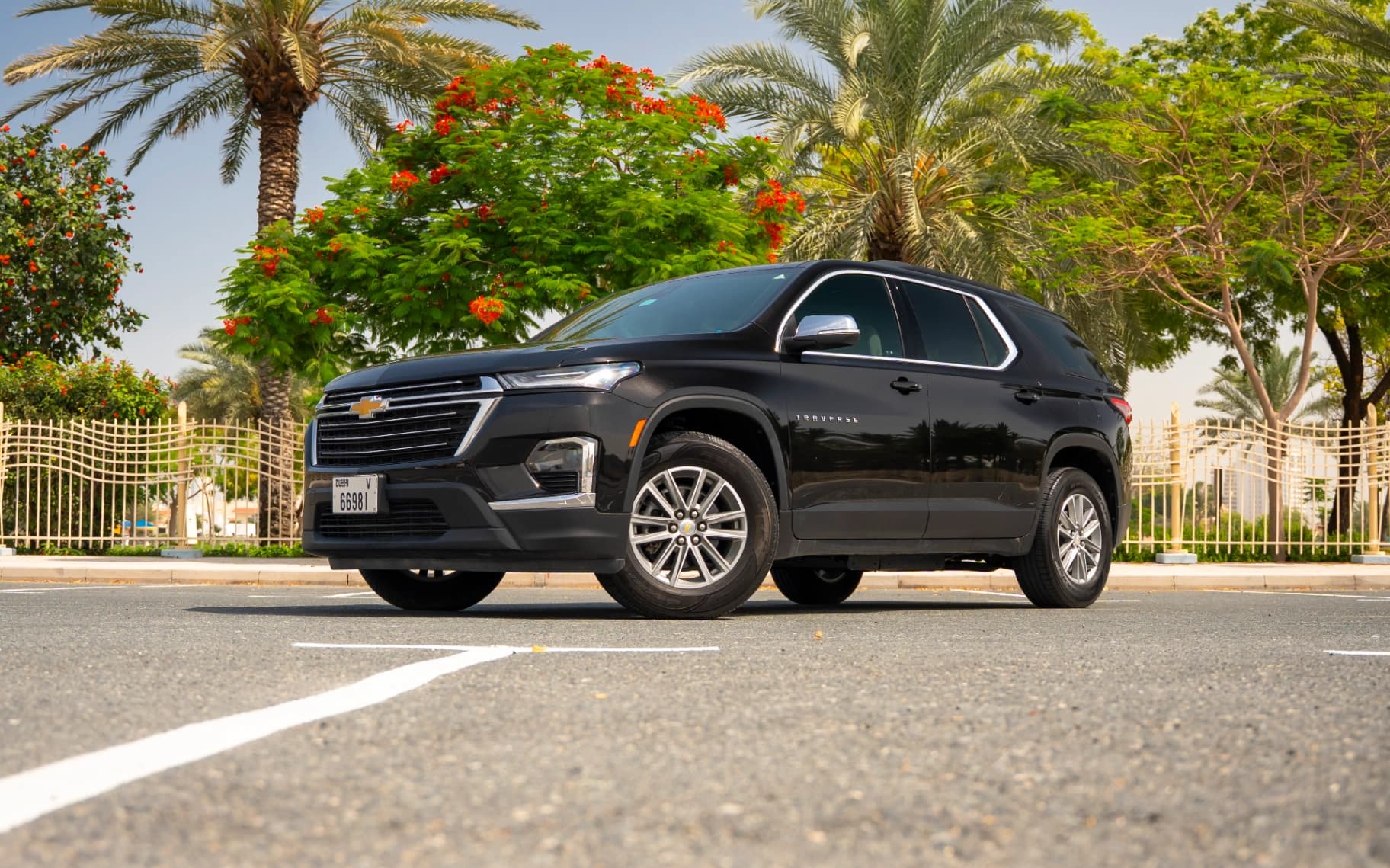
Live prices from our fleet. The monthly figure covers the vehicle; insurance, RTA registration and admin come as one annual renewal fee.


Frequently Asked Questions
Do I need a car in Dubai?
Not if you live and work along the metro lines and rarely leave the city. Almost certainly if your commute crosses emirates, you live outside metro reach — much of Al Barsha, Mirdif, Arabian Ranches, Dubai Hills — or you have school runs. If unsure, rent monthly for two months before committing to anything longer.
Can I drive on my home country licence?
As a visitor, yes. As a resident, no — you need a UAE licence. Holders from around 50 countries including the UK, US, most of the EU, Canada, Australia and the GCC can convert without testing; everyone else goes through a UAE driving school with classes, theory and a road test. Start the process immediately, not after choosing a car.
Why was I declined when my credit score at home is excellent?
Because credit history does not cross borders. Your AECB file is empty rather than negative, and lending policies treat an absence of evidence conservatively. Salary is not the constraint — local history is.
What is the fastest way to get a car as a new arrival?
Lease-to-own. It requires two documents — your Emirates ID and your UAE driving licence — and approval on a complete file is typically same-day to 24 hours. No AECB file is needed and no 20% down payment is mandated, unlike bank finance.
How much do I need up front?
A bank requires a minimum 20% of the vehicle value in cash — Central Bank policy. A zero-down lease still means paying the first monthly instalment, Year 1 insurance and registration before delivery, so ask for that total itemised in writing.
Should I rent monthly or commit to a lease?
Rent while you are on probation, uncertain about staying, or still learning your routine — roughly AED 2,800–3,200 for a mid-range saloon versus AED 2,200–2,500 on a committed term. That gap is around AED 7,200 a year, which is the price of being able to stop. Commit once employment and routine are settled.
What does a car actually cost to run here?
Beyond the payment: Salik at AED 6 peak and AED 4 off-peak per crossing (free 01:00–06:00, plus 5% VAT since June 2026), paid parking, fuel, and annual insurance and registration renewals from Year 2 onwards, which are usually billed separately from the monthly figure.
Can I take the car to Oman?
Only with a written NOC from the registered owner — the leasing company or the bank — plus the correct insurance extension for Oman. Request it well ahead of travel; it is not issued at the border.
How do I build a UAE credit file?
Put utilities in your own name and pay on time, take a modest credit card and clear it in full monthly, never bounce a cheque, and keep your salary flowing through one account. The AECB now also considers payslip data, cheque clearance and utility payments, so ordinary behaviour counts.
Can I use my home-country credit history?
Sometimes. The AECB has partnered with Nova Credit to let newcomers bring home-country credit data into UAE applications. Whether it helps depends on your country of origin and whether the lender participates — ask directly rather than assuming.
What if I leave the UAE before the contract ends?
Ask before you sign what settling early costs, as a specific number. Some providers treat a documented visa cancellation differently from a voluntary exit, but that is not standard and is only useful if it is written into your contract.
Should I buy a used car privately instead?
It can be cheaper, but odometer tampering and undisclosed accident history both exist in this market. Budget for an independent pre-purchase inspection, and remember that a private purchase means arranging your own insurance, registration transfer and any finance separately.
Ready to Get Started?
Apply today — 24-hour approval, no credit check, transparent pricing.
Get Started as an Expat