Lease-to-Own Cars in Dubai: The Complete Guide
The company owns the car until the end. Everything else follows from that.
What lease-to-own is, in one paragraph
A leasing company buys the vehicle you chose and registers it in its own name. You pay a fixed monthly amount for the use of it over an agreed term — usually 24 to 48 months — and at the end you have the option to buy it outright for a price set in the contract.
That is the whole structure. Everything else follows from one fact: for the length of the contract, the car is not yours. It belongs to the leasing company, which is why no bank loan is involved, why your credit history is not the deciding factor, and why you cannot sell or modify the vehicle while you are driving it.
The UAE market also uses "lease-to-own" loosely to describe long rentals that never transfer ownership. Before you sign anything, find the clause that states the purchase option and its price. If there is no such clause, you are renting.
How it differs from a bank auto loan — structurally, not cosmetically
A bank lends you money; you buy the car; the bank holds security over an asset you own. A leasing company buys the car; you pay to use it. Those are different transactions, and UAE regulation treats them differently.
Bank auto finance operates inside rules set by the UAE Central Bank:
• Minimum 20% down payment. On a AED 250,000 vehicle that is AED 50,000 in cash before anything else happens. No branch can waive it. • Maximum tenure 60 months. • Debt Burden Ratio capped at 50% — all your monthly obligations against your income. • AECB credit assessment, where a score below 600 on the 300–900 scale commonly means a decline.
Lease-to-own sits outside that framework because nothing is being lent. This produces the three practical differences people actually notice: no mandatory 20% down payment, approval based on affordability rather than credit score, and the obligation not registering on your AECB file as a loan.
The cost of those differences is that you pay more in total than a qualified borrower would pay a bank, and you do not hold the asset until the end.
The five steps, and what can go wrong at each
1. Choose the vehicle. From the company's fleet, or nominate one from the UAE market for them to source. If you nominate, confirm in writing who bears the cost if the inspection fails after purchase.
2. Get approved. Emirates ID and UAE driving licence. That is the whole file — no salary certificate, no bank statements, no trade licence. A complete file is usually decided same-day to 24 hours. The delays that actually occur are a name mismatch between licence and Emirates ID, or an Emirates ID or licence within weeks of expiry.
3. Agree the structure. Down payment (which may be zero), monthly amount, term, mileage cap, and whether there is a balloon at the end. Every one of these is negotiable in principle; the mileage cap is the one people forget to negotiate and later regret.
4. Sign and pay the initial amount. This is not zero even on a zero-down contract: expect the first monthly payment, Year 1 insurance, and registration plus admin. Ask for it itemised before the day of signing, not on it.
5. Drive, then decide. At the end of the term you buy the car at the contract price, hand it back if the contract gives you that right, or roll into a new vehicle. Know which of the three you are aiming for before you sign — the arithmetic differs for each.
What the monthly payment covers, and what it does not
On a properly structured UAE lease-to-own contract, the monthly figure typically includes comprehensive insurance, registration, scheduled servicing, and the leasing company's admin. That is genuinely convenient: it converts four unpredictable annual costs into one predictable monthly one.
What it does not include, and what surprises people in month two:
• Salik. AED 6 per crossing at peak, AED 4 off-peak, free between 01:00 and 06:00 — and since 1 June 2026 subject to 5% VAT. A four-gate daily commute is roughly AED 500 a month on top of everything else. • Fuel and parking. Obvious, but worth stating alongside the rest. • Traffic fines. Yours, and they reach the registered owner first — so the company will pass them to you, sometimes with an administrative fee. Ask what that fee is. • Tyres and brakes. Often excluded from "servicing" or covered only against manufacturing defect rather than wear. On a high-mileage contract this is real money. • Excess mileage. Charged per kilometre beyond the cap. • Year 2 onwards insurance and registration. On most contracts the annual renewal is billed to you separately rather than folded into the monthly figure. This is why the Year 2 cash outflow surprises people who budgeted only for the monthly payment.
Who qualifies — and who genuinely should not sign
Qualifies comfortably: UAE residents with a valid Emirates ID and a UAE driving licence. Those two documents are the whole requirement — no salary certificate, no trade licence, no three months of statements, whether you are salaried or self-employed. What stands behind the contract is the vehicle itself, registered to the leasing company for the entire term, rather than a file of paperwork. Irregular earnings are therefore not the obstacle they become under credit scoring — though every application is still assessed and decided individually.
Qualifies but should think harder:
• On probation. UAE probation runs up to six months and can end with short notice. A 36-month commitment signed in month two is a bet against yourself. If you must, choose a cheaper vehicle than the one you want. • Planning a mortgage within two years. A lease is not a registered loan, so it does not consume DBR mechanically — but a thorough mortgage underwriter reading your bank statements will see the payment. Ask your broker how they treat it before you commit to the car. • Uncertain about staying in the UAE. Understand the early-exit cost as a number, not a formula, before you sign.
Should not sign: anyone for whom the monthly payment only works in a month with no surprises. The structure does not flex, and the vehicle is not yours to sell if things tighten.
The arithmetic against renting and against buying
Compare across the full term rather than by monthly figure, because the monthly figure is the least informative number in the comparison.
Against monthly rental. A mid-range saloon runs roughly AED 2,800–3,200 monthly on a rolling contract versus about AED 2,200–2,500 on a committed 12-month term. Over a year that gap is around AED 7,200 — and at the end of twelve months of renting you have paid roughly AED 36,000 and have no claim on anything. Renting wins only when you genuinely need the option to stop.
Against a bank loan. If you have the 20% down payment, a clean AECB file and a salary certificate, a bank loan is the cheaper way to own a car in the UAE. That is simply true and any leasing company that tells you otherwise is selling. Lease-to-own wins on access, speed and credit-file neutrality — not on total cost.
Against paying cash. Cash is cheapest of all in absolute terms and worst for liquidity. The question is what else that capital could be doing. For a business owner with a use for working capital, tying AED 250,000 into a depreciating asset is a poor trade even at a higher financing cost.
Balloon payments: the lever that lowers the monthly
A balloon defers a fixed percentage of the vehicle's value — commonly 30% — to a lump sum at the end of the term. Your monthly payment drops by roughly 20–30%; a five-figure decision waits for you at month 36.
Three exits exist, and you should know which you are aiming for before signing:
• Pay the balloon and own the car. Requires cash you must plan for from month one. • Refinance it into a new term. Available, but you pay financing costs on the same vehicle twice. • Hand the car back. Check whether return is your right or the company's discretion, what condition standard applies, and who assesses it.
A balloon is a sound tool if your income is rising or you intend to change cars every three years. It is a poor one if you chose it because the monthly number looked affordable — that is the route to refinancing a depreciating asset at month 36 and starting the problem again.
Contract clauses worth reading twice
Ask for written answers. A provider who will not put these in writing is telling you something:
• Mileage cap and excess rate. Estimate honestly: a Dubai–Abu Dhabi commute three days a week is about 3,600 km a month on its own. Buying a higher cap up front is always cheaper than the excess rate later. • Early settlement. "What do I pay to settle at month 18 of 36?" — a number, not a formula. This is where contracts differ most. • Insurance scope. Comprehensive or third-party, agency repair or approved garage, what excess, who is a named driver. Ask to see the policy document before delivery. • Total loss and theft. Does the insurer settle to the leasing company, and are you liable for any gap between that settlement and the outstanding contract value? Get the gap position in writing. • Cross-border travel. Oman and Saudi Arabia need a written NOC from the registered owner plus the right insurance extension. Not issued at the border — request it well ahead. • Late payment. The charge, the grace period, and the point at which the company can recover the vehicle. • End of term. Purchase price or formula, return condition standard, who pays the transfer fee, and how long the transfer takes.
Photograph every page you sign, including schedules. Contracts get amended verbally and remembered differently.
Getting the best terms
Practical levers, roughly in order of how much they move the number:
Put money down if you have it and no better use for it. Every dirham of down payment reduces the amount being financed. Zero down is a liquidity tool, not a discount.
Choose the term deliberately. Longer terms lower the monthly and raise the total. Match the term to how long you actually want this specific car.
Negotiate the mileage cap before signing, not the price after. Providers have more room on caps than on headline rates, and the excess rate is where contracts quietly become expensive.
Ask for the total, always. "What is the sum of everything I will pay across this contract, including the balloon and everything due before delivery?" One number. Compare providers on that, not on the monthly.
Time it if you can. End of quarter and end of model year produce more flexibility than mid-cycle.
Take the inspection seriously on a used vehicle. A pre-purchase inspection on a car you are committing to for three years is not an optional extra.
Что можно взять прямо сейчас
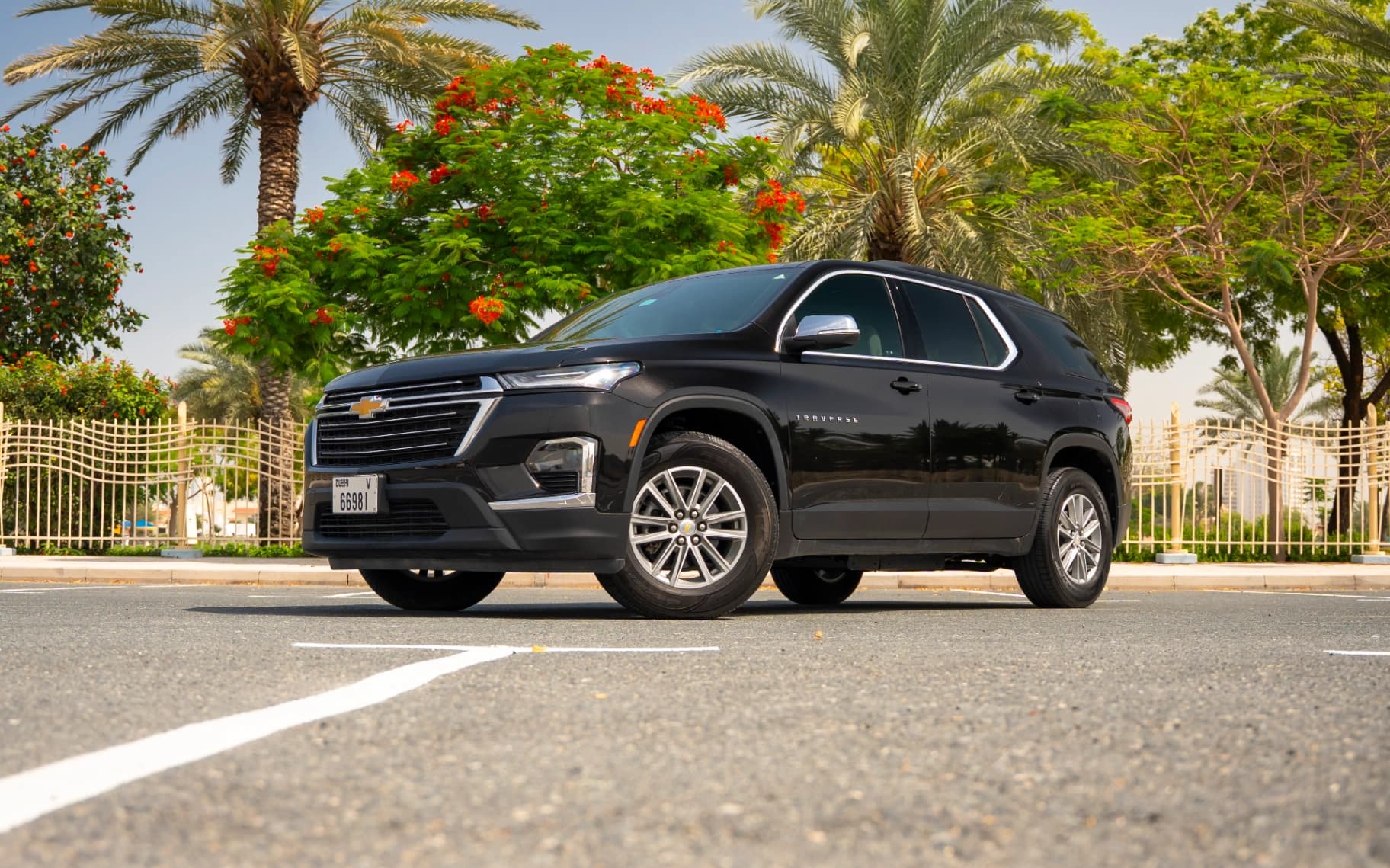
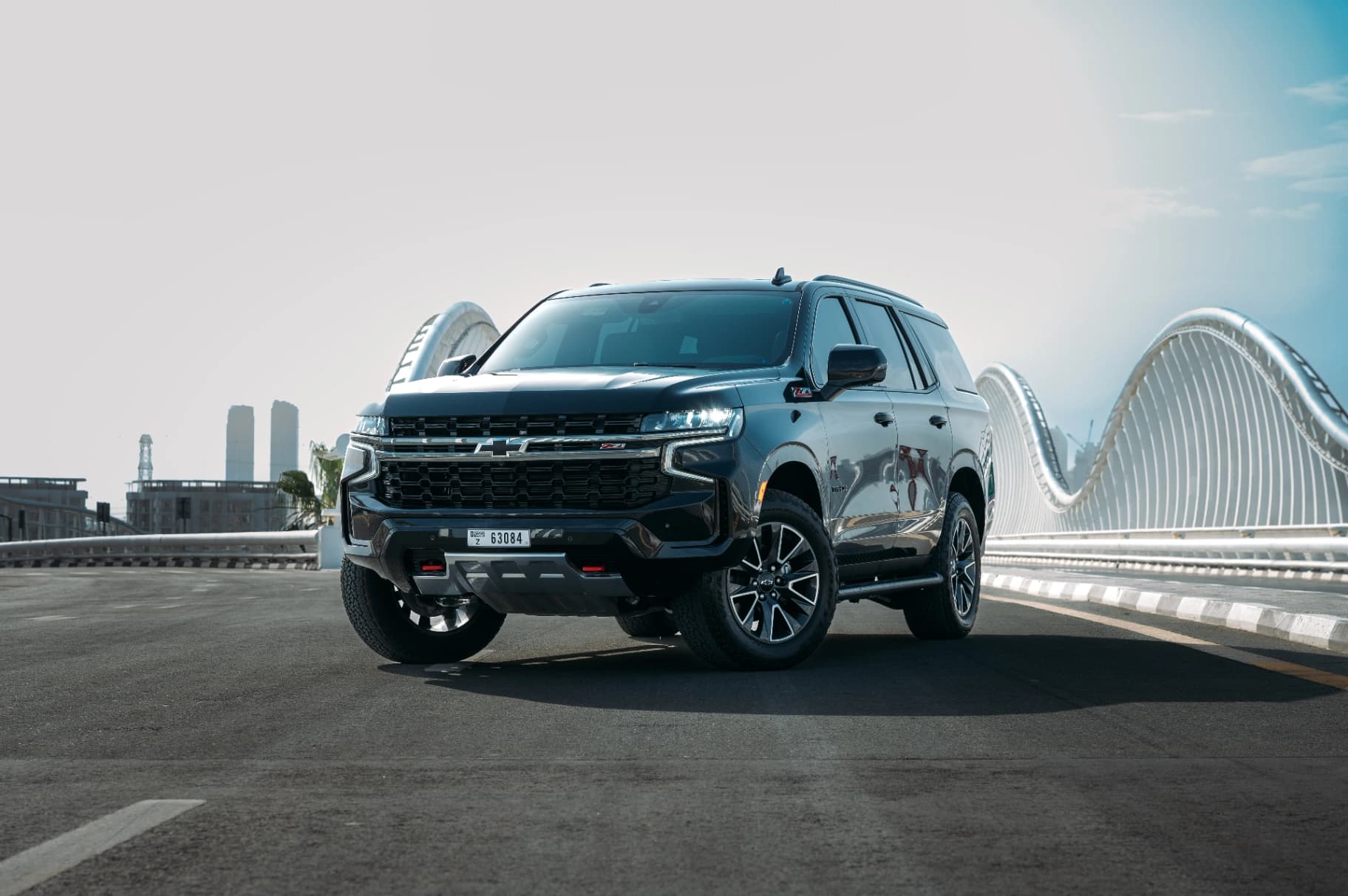
Live prices from our fleet. The monthly figure covers the vehicle; insurance, RTA registration and admin come as one annual renewal fee.

Frequently Asked Questions
What is lease-to-own in Dubai?
A leasing company buys the vehicle and registers it in its own name; you pay a fixed monthly amount to use it over an agreed term, with a contractual option to purchase at the end. Check that the purchase option and its price are actually written in the contract — some products marketed as lease-to-own are long rentals that never transfer ownership.
How is it different from a bank car loan?
A bank lends money against a car you own; a leasing company owns the car and you pay for its use. That is why bank finance requires the Central Bank's minimum 20% down payment and an AECB credit assessment, while lease-to-own can approve on affordability with no down payment. The trade-off is a higher total cost and no ownership until the end.
Do I need a credit history?
Not in the conventional sense — the assessment is affordability-based. For contrast, a bank auto loan generally wants an AECB score above 600 on the 300–900 scale, and a newly arrived expat with an empty file is often declined regardless of their credit standing abroad.
What documents do I need?
Emirates ID and a UAE driving licence. That is the entire list — no salary certificate, no bank statements and no trade licence, whether you are salaried or self-employed. A separate visa copy is not needed either, since an Emirates ID is not issued without residency. A complete file is usually decided within 24 hours.
What is included in the monthly payment?
Typically comprehensive insurance, registration, scheduled servicing and admin. Not included: Salik, fuel, parking, traffic fines, usually tyres and brakes, excess mileage, and — on most contracts — the Year 2 onwards insurance and registration renewals, which are billed annually and separately.
How much do I pay before I get the car?
Even on a zero-down contract, expect the first monthly payment, Year 1 insurance and registration plus admin fees. On a mid-range SUV around AED 7,000 per month that is roughly AED 19,000–20,000. Ask for it itemised in writing before the day of signing.
Can I buy the car early?
Usually yes, but the settlement formula varies widely and is where contracts differ most. Ask what you would pay to settle at month 18 of a 36-month term and get the answer as a number in writing.
What happens at the end of the contract?
You buy the vehicle at the contractual price, hand it back if the contract gives you that right, or roll into a new vehicle. Decide which you are aiming for before signing — the arithmetic is different for each, particularly if there is a balloon payment.
Can I take the car to Oman or Saudi Arabia?
Only with a written NOC from the registered owner — the leasing company — plus the correct insurance extension for the destination. Request it well ahead of travel; it is not issued at the border.
What if I lose my job?
The contract does not pause. Contact the provider immediately rather than missing a payment — early contact leaves options that a default does not. Understand the cancellation terms before you sign, especially if you are still on probation.
Does it affect a future mortgage application?
A lease is not a registered loan, so it does not mechanically consume part of the 50% Debt Burden Ratio the way a bank car loan does. But a mortgage underwriter reading your bank statements will see the payment. Ask your broker how they treat lease payments before committing to a car.
Is lease-to-own cheaper than buying?
No. If you have the 20% down payment, a clean AECB file and a salary certificate, a bank loan is the cheaper route to ownership, and paying cash is cheaper still. Lease-to-own wins on access, speed, credit-file neutrality and liquidity — not on total cost.
Ready to Get Started?
Apply today — 24-hour approval, no credit check, transparent pricing.
Apply for Lease-to-Own